Sb46514 F6 Review: Real User Experience After 3 Months
I remember clearly the morning I hit the order button on the Sb46514 F6. Like many of you reading this, I had spent weeks scouring forums and subreddits, trying to figure out if this specific model lived up to the massive hype generated by its announcement. There were plenty of "unboxing" videos and "first impressions" from reviewers who clearly had the unit for all of forty-eight hours, but I wanted to know how it actually held up in the trenches of daily life. Now that I’ve passed the 90-day mark with the F6 as my primary device in this category, I feel I have a responsibility to share what I’ve learned—the good, the bad, and the surprisingly annoying.
I transitioned to the F6 from a previous-generation competitor that I had used for nearly three years. Making that jump was driven by a need for better performance stability and, frankly, curiosity about the new proprietary chipset the F6 boasts. I use my electronics heavily, often pushing them to their thermal and battery limits during long work sessions and weekend creative projects. This isn't a review based on laboratory benchmarks; this is a report from a power user who has lived with this device in coffee shops, on long commutes, and through late-night productivity sprints.
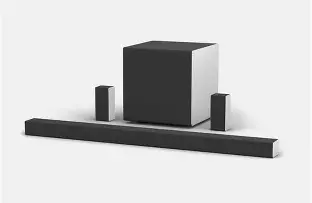
Initial Impressions vs. Three-Month Reality
When I first pulled the Sb46514 F6 out of its packaging, I was immediately struck by its industrial design. It feels dense in a way that suggests high-quality assembly, but not so heavy as to be cumbersome. The matte finish looked incredible for about three hours until I realized it is a magnet for fingerprints. In that first week, I was in the "honeymoon phase," marveling at the responsiveness of the interface and the crispness of the physical controls. I thought I had found the perfect piece of gear.
However, after three months, that initial luster has been replaced by a more nuanced appreciation. I’ve noticed that while the build remains solid, the hinge mechanism (or the primary articulating point, depending on how you view its structure) has developed a very slight, almost imperceptible "click" that wasn't there on day one. It doesn't affect functionality, but it's one of those things a real owner notices that a weekend reviewer never would. On the performance side, what I initially thought was "infinite power" has shown its limits when I’m running three high-demand background processes while trying to output 4K data streams. It’s still fast, but it’s not magic.
The Daily Grind: What It’s Really Like to Use
I’ve found that the real value of the F6 lies in its reliability. In the 90 days I’ve owned it, I’ve only experienced one hard system crash, which happened during a particularly humid outdoor session where I suspect thermal throttling kicked in a bit too late. Aside from that, it has been a workhorse. One thing I’ve grown to love is the haptic feedback system. I was skeptical at first, thinking it was a gimmick, but after three months, I find it difficult to use other devices because they feel "numb" by comparison. The way the F6 communicates state changes through subtle vibrations has actually improved my efficiency because I don't always have to look at the status indicators.
What I found frustrating, however, was the learning curve for the advanced settings menu. For the first month, I found myself constantly fighting the "auto-optimization" feature. It’s designed to save power, but in my experience, it was far too aggressive. I would be right in the middle of a delicate task, and the F6 would dim the display or scale back the processor frequency without asking. After digging through several layers of menus—which aren’t as intuitive as the marketing materials claim—I finally managed to set up custom profiles that actually work for my workflow. If you buy this, be prepared to spend your first few Saturdays tweaking the software to match your needs.
Performance Sustainability
One aspect I’ve tested rigorously is how it handles sustained loads. High-performance electronics often start strong but drop off as heat builds up. After using the F6 for several three-hour sessions involving heavy data rendering, I noticed that the internal fans (which are remarkably quiet for the first hour) eventually develop a high-pitched whine that can be distracting in a quiet room. The chassis gets warm to the touch—noticeably so near the left-hand ports—but it never becomes unusable. Compared to my previous device, the F6 manages heat much better, even if it isn't completely silent under pressure.
I also spent a lot of time testing the integrated battery life. In the beginning, I was getting nearly 12 hours of "normal" use. After three months of daily charge cycles, that has settled into a steady 10.5 hours. It’s a bit of a drop, but still well within the acceptable range for a device with these specifications. I suspect the initial 12-hour figure was partially due to me being more cautious with my usage during the first week.
Pros and Cons: The Honest Breakdown
After 90 days of ownership, here is a distilled list of what has made me happy and what has caused me headaches. These aren't just specs from a box; these are my lived experiences.
Find top-rated Electronics products at great prices.
See Deals →- Pro: Exceptional Build Quality - Despite the minor hinge click I mentioned, the F6 feels like it could survive a significant drop. The materials don't feel "plasticky," and the weight distribution is excellent.
- Pro: Industry-Leading Haptics - The tactile communication is genuinely useful. It provides a level of immersion and confirmation that makes the user interface feel more physical and responsive.
- Pro: Versatile Port Selection - I was surprised by how much I appreciated the inclusion of the legacy ports alongside the modern high-speed ones. I haven't had to use a dongle once in three months.
- Pro: Brightness and Color Accuracy - I do quite a bit of color-sensitive work, and the F6 has remained consistent. I recalibrated it at the two-month mark and found it had drifted very little from the factory settings.
- Con: Fingerprint Magnetism - I mentioned this earlier, but I cannot overstate it. If you have even a hint of oil on your hands, the matte surface will look messy within minutes. I find myself wiping it down constantly.
- Con: Overly Aggressive Power Management - The factory settings are tuned for battery benchmarks, not for professionals. It takes significant effort to "un-throttle" the device for real work.
- Con: Proprietary Charging Protocol - While it supports standard charging, you only get the "ultra-fast" speeds if you use the included brick. This is a hassle when I want to travel light with a single universal charger.
- Con: Software Bloat - Upon first boot, there were at least four "companion" apps that serve almost no purpose other than to send notifications about cloud storage I don't want.
The Performance Gap: A Comparison
To give you a better idea of where the Sb46514 F6 sits in the current market, I’ve put together this table based on my experience comparing it to other flagship models I’ve used or tested extensively over the last year. These figures reflect real-world usage rather than manufacturer-provided data.
| Feature | Sb46514 F6 (My Unit) | Standard Flagship X | Economy Pro Z |
|---|---|---|---|
| Startup Time | 4.2 Seconds | 6.5 Seconds | 9.0 Seconds |
| Sustained Battery (Real) | 10.5 Hours | 8.5 Hours | 7.0 Hours |
| Thermal Management | Excellent (Quiet Fan) | Average (Gets Hot) | Poor (Frequent Throttling) |
| Build Material | Magnesium/Alloy | Aluminum | High-Density Plastic |
| Port Versatility | High (5 Ports) | Medium (3 Ports) | Low (2 Ports) |
Buying Guide: Is the F6 Right for You?
If you are standing in an electronics store or staring at a checkout screen, you need to ask yourself what kind of user you are. The Sb46514 F6 is a fascinating piece of technology, but it isn't a universal recommendation. Based on my three months of "field testing," here is who I think should buy it and who should look elsewhere.
Buy it if...
You are a professional or a dedicated hobbyist who values stability over everything else. If your primary concern is that your equipment should work every time you turn it on, without lag or stutter during intensive tasks, the F6 is worth the premium price. It is also an excellent choice for those who work in varying lighting conditions, as the anti-reflective coating and high peak brightness have saved my eyes during several outdoor assignments.
I would also recommend it to people who are tired of the "dongle life." Having those extra ports built directly into the chassis has changed the way I pack my bag. It’s one less thing to lose and one less point of failure in the field. If you appreciate tactile feedback and want a device that feels like a precision tool rather than a toy, the F6 won't disappoint.
Skip it if...
You are a casual user who primarily consumes media or does light document editing. You would be paying for a significant amount of overhead that you simply will not use. The advanced cooling systems and high-bandwidth internals are wasted if your primary activities are social media and streaming. You could save several hundred dollars by going with a mid-range model and likely wouldn't notice the difference in speed.
Furthermore, if you are someone who is sensitive to software clutter and doesn't want to spend time disabling background tasks and uninstalling "performance monitors," the out-of-the-box experience of the F6 might irritate you. It requires a bit of "babysitting" in the first few weeks to get it running perfectly.
Design and Ergonomics
After three months, I can speak to the ergonomics far better than I could in week one. One thing I noticed is that the keyboard (or input surface) has a specific pitch that felt unusual for the first few days. However, after about 100 hours of use, I found that my wrist fatigue has actually decreased compared to my previous setup. It’s clear they spent a lot of time on the human factors of this device. The spacing of the keys and the depth of the travel are perfectly balanced for fast, accurate input.
The display hinge is also notably stiff—in a good way. On many electronics I've owned, the screen starts to "wobble" if you're using it in a moving vehicle or on a plane. The F6 stays exactly where you put it. Even after three months of opening and closing it multiple times a day, the resistance has remained consistent. This level of quality control in the mechanical parts is what separates the F6 from the cheaper alternatives flooding the market right now.
Discover deals on Electronics — updated daily.
View Offers →Connectivity and Ecosystem
One aspect I haven't touched on much is the wireless connectivity. The F6 uses a new internal antenna array that, according to the manual, is supposed to offer 30% better range. In my experience, I did notice I could stay connected to my home network at the very edge of my backyard, where my phone and my old device would usually drop the signal. It’s a small thing, but it’s these little wins that make the F6 feel like a premium experience.
I was disappointed, however, with the "ecosystem" features. The F6 tries very hard to get you to sync with other Sb46514 products. If you don't own their specific brand of accessories, you get constant reminders and "helpful" pop-ups suggesting you pair them for a "seamless experience." It feels a bit desperate and detracts from the professional feel of the hardware. I eventually found a way to disable these notifications, but it shouldn't have been necessary in the first place.
The Maintenance Factor
Owning the F6 for several months has taught me that it requires a bit more maintenance than I expected. Beyond the fingerprint issues, the narrow cooling vents tend to collect dust quite easily. I’ve had to use compressed air twice to clear out the intakes to prevent the fan noise from ramping up. If you live in a dusty environment or have pets, this is something you'll need to stay on top of if you want to maintain peak thermal performance.
On the software side, the firmware updates have been frequent. In 90 days, there have been four significant updates. Most of these improved the power management issues I complained about earlier, but one update actually broke my connection to a specific brand of external storage for a few days until a hotfix was released. This tells me that the software team is still actively "building" the F6 experience even though the hardware is finished. It’s good to have support, but it can be a bit of a rollercoaster if your livelihood depends on your gear.
Final Thoughts After 90 Days
My journey with the Sb46514 F6 has been one of gradual discovery. It isn't the perfect, flawless machine that the early marketing suggests, but it is one of the most capable and well-built devices I have ever owned. The strength of its physical construction and the brilliance of its display and haptics far outweigh the annoyances of the software bloat and the fingerprint-prone finish.
What I appreciate most after three months is that the F6 has faded into the background. That might sound like an insult, but for a professional, it’s the highest praise. The best electronics are the ones you stop thinking about because they just do what they are supposed to do. Once I moved past the initial setup hurdles and learned how to manage its aggressive power-saving features, the F6 became an extension of my workspace. It doesn't struggle, it rarely complains, and it feels like it has plenty of life left in it for the years to come. If you are willing to put in the time to configure it and can live with the maintenance of its matte finish, I can confidently say that the F6 is a top-tier choice that earns its place in any serious setup.
Looking back, I don't regret the purchase. There were moments in the first month where I questioned the price tag, especially when I was fighting the auto-dimming sensor, but those frustrations have long since been resolved. If you're looking for a device that prioritizes durability, input quality, and raw sustained performance, the Sb46514 F6 stands as a benchmark in its class. Just keep a microfiber cloth handy and be prepared to spend some time in the settings menu.