Should You Upgrade from Q90 Q90T Qled to Q80 Q80R Qled?
In the rapidly evolving landscape of home entertainment, the cycle of television releases can often create confusion for even the most tech-savvy consumers. Samsung, a leader in the QLED market, has a naming convention that typically suggests a linear progression of quality and performance. However, savvy buyers and enthusiasts often look back at previous flagship models to see how they stack up against newer, mid-to-high-range offerings. One of the most frequent points of debate involves comparing the 2020 flagship 4K model, the Q90/Q90T, with the preceding year's highly acclaimed Q80/Q80R. This article explores whether moving between these two specific models constitutes an upgrade, a lateral move, or perhaps even a step backward in certain performance categories.
The Evolution of Samsung QLED Standards
To understand the nuances of the Q90T and the Q80R, one must first understand the shift in Samsung's product philosophy between 2019 and 2020. In 2019, the "R" series represented a pinnacle of 4K performance, with the Q80R positioned as a high-end powerhouse sitting just below the top-tier Q90R. By 2020, with the introduction of the "T" series, Samsung shifted its focus slightly toward its 8K lineup. This led to a restructuring where some 4K models saw a slight adjustment in specifications to make room for the 8K flagships. Consequently, the Q90T of 2020 is often compared to the Q80R of 2019 because their technical specifications and real-world performance profiles are surprisingly similar, despite their differing series numbers.
Detailed Analysis: The Samsung Q90T QLED (2020)
The Q90T was released as Samsung’s premier 4K television for 2020. It was designed to offer the best possible 4K experience without requiring the jump to 8K resolution. It features a Full Array Local Dimming (FALD) backlight system, which is essential for achieving deep black levels and high contrast. One of its standout features is the "Ultra Viewing Angle" layer, which ensures that colors remain accurate and contrast stays high even when watching from the side of the room. This makes it an excellent choice for wide living room setups where family members are spread across various seating positions.
For gamers, the Q90T introduced HDMI 2.1 support on one of its ports, enabling features like 4K at 120Hz, Variable Refresh Rate (VRR), and Auto Low Latency Mode (ALLM). This made it a future-proof choice for the PlayStation 5 and Xbox Series X era. The peak brightness of the Q90T is impressive, often reaching over 1,500 nits in HDR Windows, which allows highlights to "pop" with significant intensity, making it a stellar performer in bright rooms.
Detailed Analysis: The Samsung Q80R QLED (2019)
The Q80R was a darling of the 2019 lineup. At the time of its release, it was lauded for bringing flagship-level features down to a slightly more accessible price point. Like the Q90T, it utilizes a FALD backlight, though the zone count differs slightly. The Q80R was praised for its native contrast and its ability to handle reflections, thanks to a very effective anti-reflective coating. While it lacks the HDMI 2.1 certification found on newer models, it does support FreeSync and possesses a very low input lag, making it a formidable gaming monitor for its time.
The build quality of the Q80R is robust, featuring a central T-shaped stand that feels premium. Its HDR performance is excellent, providing a wide color gamut thanks to the Quantum Dot technology. However, it lacks some of the refined AI-upscaling features that Samsung introduced in later years with the Quantum Processor 4K, which can make a difference when viewing lower-resolution broadcast content or older DVDs.
Performance Comparison: Picture Quality and HDR
When comparing these two units, the primary concern for most buyers is the "black level" performance. The Q80R has a slightly higher native contrast ratio in some testing environments because it does not use the aggressive "Ultra Viewing Angle" technology found on all sizes of the Q90T. While the Q90T has better viewing angles, the Q80R can sometimes produce slightly deeper blacks in a completely dark room when viewed head-on. However, the Q90T counters this with a more sophisticated local dimming algorithm that reduces "blooming"—the halo effect seen around bright objects on a dark background.
In terms of brightness, the Q90T generally wins. It was engineered to be a "light cannon," designed to combat glare in sun-drenched rooms. While the Q80R is by no means dim, the Q90T provides that extra headroom needed for HDR10+ content to truly shine. Both TVs lack Dolby Vision support, as is standard for Samsung, but they handle HDR10 and HLG content with professional-grade accuracy after basic calibration.
Shop the latest TVs & Home Theater picks on Amazon.
Browse Now →Gaming Features and Connectivity
This is where the two models diverge most significantly. If you are a console gamer or a PC enthusiast, the Q90T is the clear winner. The inclusion of HDMI 2.1 allows for higher frame rates and smoother motion. While the Q80R supports VRR (via FreeSync), it is limited to HDMI 2.0 bandwidth, meaning you often have to choose between high resolution or high frame rates. The Q90T also features "Game Motion Plus," which allows users to apply some motion interpolation even while in Game Mode, reducing judder without adding significant input lag.
Direct Comparison Table
| Feature | Samsung Q80R (2019) | Samsung Q90T (2020) |
|---|---|---|
| Backlight Type | Full Array Local Dimming | Full Array Local Dimming |
| HDMI Version | HDMI 2.0 (x4) | HDMI 2.1 (x1), HDMI 2.0 (x3) |
| Peak Brightness | Approx. 1,000 - 1,200 nits | Approx. 1,400 - 1,600 nits |
| Viewing Angle | Wide (Standard) | Ultra Viewing Angle (Enhanced) |
| Motion Handling | 120Hz Native Refresh Rate | 120Hz Native Refresh Rate |
| Smart Platform | Tizen (2019 Version) | Tizen (2020 Version) |
| Gaming Features | FreeSync, Low Input Lag | 4K@120Hz, VRR, ALLM, FreeSync |
Pros and Cons of the Samsung Q90T
- Pros:
- Exceptional peak brightness makes HDR content stand out vividly even in bright rooms.
- HDMI 2.1 support on Port 4 is essential for modern gaming consoles.
- Ultra Viewing Angle technology provides the best off-axis performance in the QLED class.
- Refined local dimming algorithm effectively minimizes blooming and light bleed.
- Active Voice Amplifier helps clarify dialogue when ambient noise increases in the room.
- Cons:
- Slightly lower native contrast compared to models without the viewing angle filter.
- Only one HDMI 2.1 port, which may be limiting for those with multiple high-end consoles.
- The stand design can be prone to slight wobbling in larger screen sizes.
Pros and Cons of the Samsung Q80R
- Pros:
- High native contrast ratio allows for deep, ink-like blacks in dark room viewing.
- Excellent reflection handling with a superior anti-glare coating for the time.
- Reliable build quality with a sturdy, minimalist aesthetic.
- Very low input lag, making it feel highly responsive for 60Hz gaming.
- Consistent performance across various content types, from sports to movies.
- Cons:
- Lacks HDMI 2.1, meaning no 4K at 120Hz for newer gaming hardware.
- Viewing angles, while good, are not as wide as the Q90T’s "Ultra" implementation.
- Local dimming can occasionally be "lazy," failing to brighten small highlights quickly enough.
- Starting to show its age in terms of smart TV interface speed and app compatibility.
Real-World Use Cases: Which One Fits Your Life?
Choosing between these two televisions often comes down to your specific environment and how you consume media. Let’s look at three typical scenarios that buyers encounter.
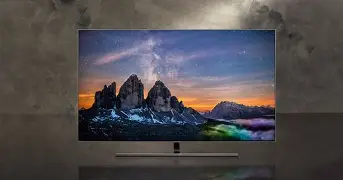
The Bright Living Room and Sports Enthusiast
If your TV sits opposite a large window or in an open-concept living area with lots of natural light, the Q90T is the superior choice. Its higher peak brightness is specifically designed to overcome glare. Furthermore, if you host game days, the "Ultra Viewing Angle" on the Q90T ensures that the person sitting on the far end of the sectional sofa still sees the same vibrant jersey colors and clear scoreboard as the person sitting dead center. The motion handling on the Q90T is also slightly more refined for fast-paced football or basketball action.

The Dark Room Cinema Purist
If you primarily watch movies at night with the lights dimmed or turned off, the decision becomes much harder. The Q80R has a certain "grit" and depth to its contrast that some movie buffs prefer. Because it doesn't have the viewing angle layer of the Q90T, its native black levels can feel slightly more consistent. However, the Q90T has more dimming zones and a faster processor to manage them. For most, the Q90T still wins here, but those who specifically value "panel contrast" over "processed contrast" might find the Q80R more pleasing for 24p cinema content.
The Next-Gen Gamer
For gamers, there is very little competition: the Q90T is the runaway winner. The ability to play games at 4K resolution with a 120Hz refresh rate is a transformative experience. Movement becomes buttery smooth, and the responsiveness of the TV is significantly improved. While the Q80R is a great gaming TV for the PlayStation 4 or Xbox One era, it simply cannot keep up with the technical demands of the latest hardware. If gaming is more than 30% of your TV usage, the Q90T is the logical path.
Buying Guide: Key Considerations
When looking at the market for these TVs today—often found in the used or "open-box" markets—keep the following factors in mind:
1. Panel Longevity: Samsung’s QLED technology uses inorganic Quantum Dots, which means these panels are not susceptible to permanent "burn-in" like OLED TVs. This makes both the Q80R and Q90T excellent long-term investments. However, as an older model, a used Q80R likely has more "on-time" hours than a Q90T. Always check the total usage hours in the service menu if possible.
Discover deals on TVs & Home Theater — updated daily.
See Deals →2. Smart Features and Updates: Samsung typically supports its Tizen OS with security updates for several years, but feature updates usually stop sooner. The Q90T, being a year newer, will likely remain compatible with new streaming apps and interface updates for a longer period than the Q80R.
Sound Quality Comparison
While most owners of a high-end QLED will likely use a dedicated soundbar or surround sound system, integrated audio is worth mentioning. The Q90T features "Object Tracking Sound" (OTS), which uses speakers built into the sides and top of the frame to make audio seem like it is coming from where the action is on screen. The Q80R has a more traditional downward-firing setup. The Q90T offers a noticeably fuller and more immersive built-in soundstage.
Is It a True Upgrade?
To answer the titular question: Is moving from a Q90T to a Q80R an upgrade? No. In the Samsung hierarchy, the Q90T is a superior model to the Q80R in almost every measurable way. It has higher brightness, better gaming features, and better viewing angles. The Q90T was the "successor" in spirit to the Q80R and even challenged the 2019 Q90R in several areas.
However, the question often asked in enthusiast circles is: "If I already own a Q80R, is it worth selling it to buy a Q90T?" This is where the answer becomes more nuanced. If you are not a gamer and you are happy with the picture quality of your Q80R, the jump to the Q90T is an incremental improvement, not a revolutionary one. You are gaining roughly 20-30% more peak brightness and slightly better processing. For many, that is not worth the hassle of a total hardware swap unless you are moving to a larger screen size at the same time.
Conversely, if you are looking to buy one of these for the first time in the secondary market, the Q90T is definitely the model to aim for. It represents a more "complete" television that bridges the gap between the older LED standards and the modern requirements of high-frame-rate media.
Conclusion
The Samsung Q90T and Q80R are both hallmark examples of why QLED technology dominated the high-end LCD market for years. The Q80R remains a sturdy, high-contrast performer that handles the basics of 4K HDR with grace. It is a "pure" television that focuses on contrast and color accuracy for the seated viewer. The Q90T, on the other hand, is a more versatile, aggressive, and modern machine. By pushing the boundaries of peak brightness and embracing the HDMI 2.1 standard, Samsung created a display that feels contemporary even several years after its launch. While the Q80R is a great TV, the Q90T is the more accomplished flagship, offering a suite of features that accommodate the needs of gamers, large families, and HDR enthusiasts alike. If you have the choice between the two, or if you are looking to future-proof your setup for the latest consoles, the Q90T stands as the definitive choice.